
English| EUR
Suggested for you
More currencies
Choose a language
Whale sharks hold the title of largest fish in the ocean, reaching lengths beyond twelve meters, yet their size tells only part of the story. Understanding their feeding biology, temperament, and the decades of interaction data from sites like Donsol reveals why this question persists—and what the answer means for anyone planning to swim alongside them.
Quick answer
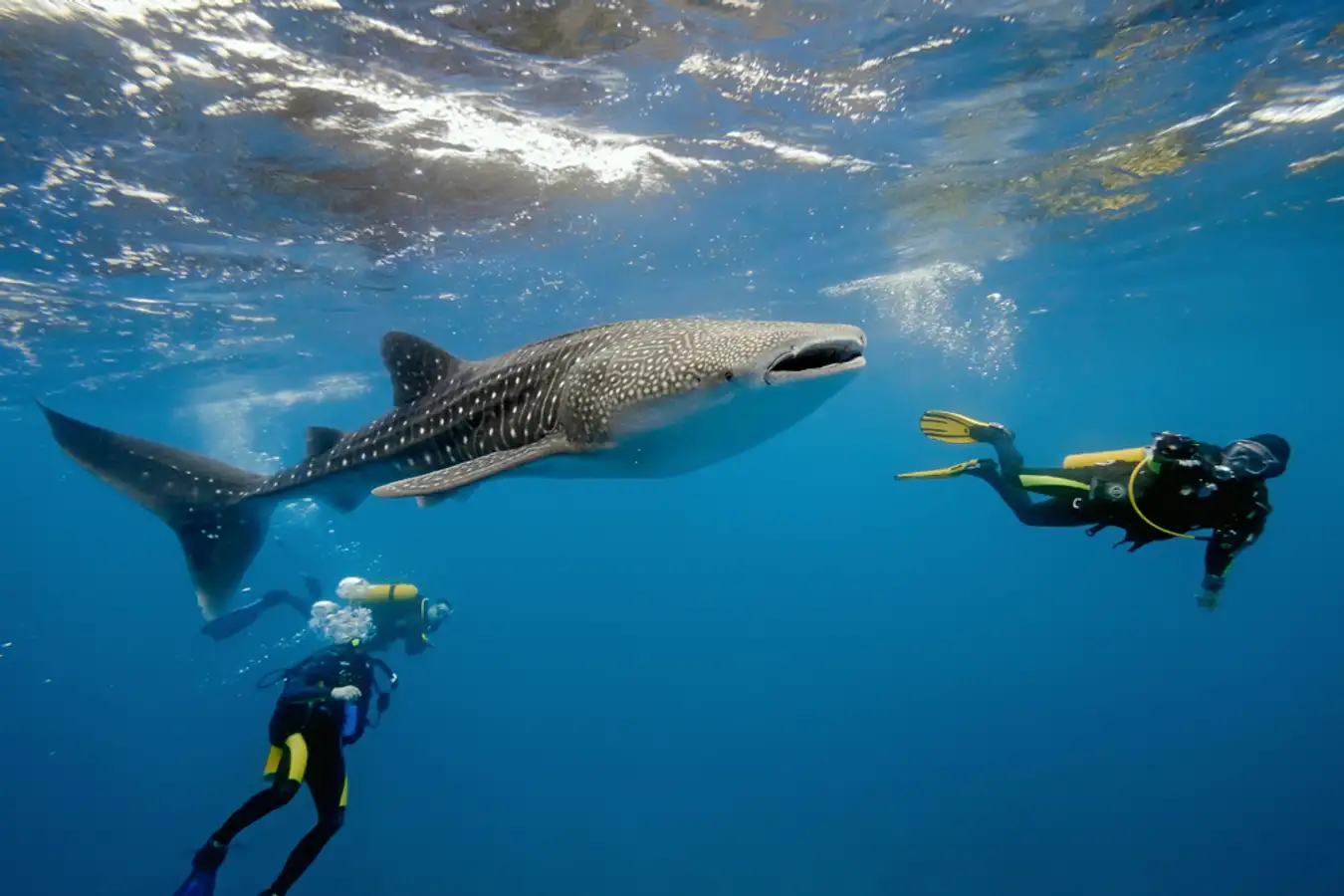
No documented case exists of a whale shark killing a human. These filter feeders possess no functional teeth for attack, subsist entirely on plankton and small fish, and display no territorial or predatory behavior toward people. Injuries from accidental contact—typically minor abrasions from the rough skin or tail—represent the only recorded harm across thousands of documented encounters in Donsol and other whale shark aggregation sites worldwide since systematic monitoring began.
Whale sharks filter between three and six thousand liters of water per hour through specialized gill rakers, trapping organisms smaller than a human fingernail. This feeding apparatus makes biting physically impossible—the vestigial teeth lining their jaws measure under three millimeters and serve no functional role. The question of whether whale sharks have ever killed anyone stems from a reasonable instinct when confronting an animal whose mouth can span one and a half meters, but physiology determines behavior, and Rhincodon typus evolved to consume zooplankton, not vertebrates. Donsol's whale shark season, running November through June, brings concentrated encounters that have generated decades of behavioral data. Researchers and tourism operators report that whale sharks actively avoid collision, altering course when swimmers enter their path. The species exhibits neither curiosity nor aggression toward humans—interactions are fundamentally one-sided, with people seeking proximity to animals engaged in feeding patterns older than the Philippine archipelago itself. Surface feeding, the behavior that draws whale sharks into Donsol's coastal waters, leaves them visible but indifferent to the snorkelers maintaining the mandatory three-meter distance. The documented incidents involve accidental strikes from the caudal fin when a whale shark executes a sudden dive, or skin abrasions when a swimmer misjudges distance. These remain rare relative to encounter volume—the Donsol Visitor Center processes thousands of registered interactions each season without serious injury. The conservation and registration fee supports the Butanding Interaction Officers who enforce approach protocols, maintaining separation that protects both species. Whale shark safety in Donsol depends less on the animal's temperament, which remains predictably docile, and more on visitor compliance with spatial boundaries designed around the physics of a multi-ton filter feeder maneuvering in shallow water. Planning a swim with these creatures means understanding what they are not: they are not aggressive, not defensive of territory, not capable of predation on large animals. The risk profile resembles that of swimming near any massive, wild animal—injury comes from proximity to bulk and momentum, not intent. The question of fatalities finds its answer in biological reality and decades of field data from aggregation sites across three oceans.
“Whale sharks evolved to consume zooplankton, not vertebrates—their feeding apparatus makes biting physically impossible.”
Due to their massive size and the common fear of sharks, many people assume whale sharks pose a threat to humans. In reality, these animals are gentle filter feeders that demonstrate no predatory behavior toward people.
MythWhale sharks are dangerous predators.
FactWhale sharks possess no teeth for biting and exclusively consume plankton and small marine organisms.
MythWhale sharks have attacked swimmers.
FactThere are no recorded instances of a whale shark killing or intentionally harming a human.
MythTheir size makes them a threat to divers.
FactWhile their large tails can cause accidental injury, whale sharks are docile and generally ignore swimmers in the water.
Donsol enforces strict interaction protocols that protect whale sharks and maintain safe distances. Following these rules ensures the animals remain calm and approachable.
The Donsol Visitor Center operates on a consistent schedule throughout the week to facilitate whale shark interaction inquiries and registrations.
The best arrival window is 07:00–08:00, as early morning departures offer the best visibility and conditions for whale shark sightings. Planning your visit for these hours helps ensure calm surface water and optimal light for encounters.
Warm, stable, 28–32°C
This period aligns with the highest concentration of plankton, drawing more whale sharks to the bay.
Variable, 27–31°C
Sightings become less predictable during these months as environmental conditions change, though interactions still occur.
—
Arriving at 07:00 minimizes wait times at the visitor center before the daily volume of guests increases.
Verdict: For the best conditions, aim for a weekday arrival between 07:00–08:00 during the peak months of February through April.
Everything you need to know about have whale sharks ever killed anyone
Records indicate that whale sharks have never killed anyone in the context of controlled interactions, as they are filter feeders with no predatory interest in humans. You will find that these gentle giants remain remarkably indifferent to snorkelers during guided sessions. Many visitors often ask have whale sharks ever killed anyone because of the sheer size of these creatures. Safety is maintained through strictly enforced protocols, ensuring that have whale sharks ever killed anyone remains a purely hypothetical concern rather than a reality. If you are still worried about the premise of have whale sharks ever killed anyone, rest assured that local boat crews are trained to manage safe distances. Interactions are conducted by boat-based spotters who follow sustainable practices to protect both the marine life and the guests. While you can find information here, actual booking services are handled by the visitor center directly to ensure all safety standards are met. Interaction rules include maintaining a specific distance from the whale shark and avoiding the use of flash photography to minimize stress. These regulations are strictly monitored by the local Bureau of Fisheries and Aquatic Resources. All visitors are required to pay a 300 PHP conservation and registration fee per person upon arrival at the facility. This fee supports ongoing local conservation efforts and the management of the visitor center. The best time to arrive is between 07:00–08:00 to take advantage of the early morning visibility and ocean conditions. Arriving within this window provides the highest probability of spotting these marine animals in their natural habitat. Children are welcome to participate, provided they are comfortable in the water and follow the safety instructions given by the guides. Family groups should ensure that younger participants are supervised at all times during the boat excursion.