English| EUR
Suggested for you
More currencies
Choose a language
Donsol pioneered community-based whale shark tourism in 1998, building a framework that places animal welfare above visitor numbers. The protocols enforced here answer the question of whether human interaction can coexist with conservation—when the model is designed correctly from the start.
Quick answer
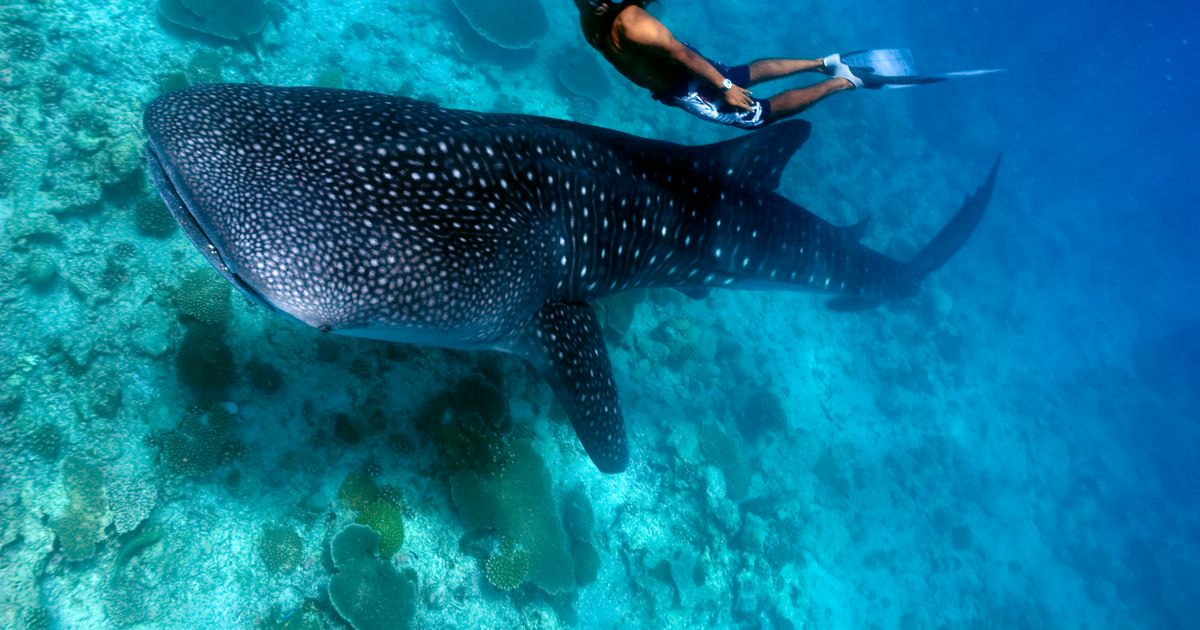
Swimming with whale sharks in Donsol is ethical when strict interaction protocols are followed. The municipality enforces no-touch rules, maintains four-meter distances, limits groups to six snorkelers per shark, and bans flash photography and motorized pursuit. Butanding Interaction Officers monitor every encounter, and seasonal closures align with the species' natural migration patterns. Revenue funds local livelihoods and coastal habitat protection, creating economic incentive for preservation rather than exploitation.
Donsol records the world's highest concentration of whale shark sightings between November and June, when plankton blooms draw Rhincodon typus into the shallow waters of Donsol Bay. The ethical framework that governs these encounters was not imported—it was written by fisherfolk who once hunted the species and chose a different path when they recognized the animals' economic and ecological value alive. The question of whether whale shark interaction tourism causes harm depends entirely on enforcement. Donsol operates under Municipal Ordinance No. 98-11, which criminalizes touching, riding, or obstructing the animals. Each boat carries a Butanding Interaction Officer trained in marine biology and visitor management. These officers terminate encounters when a shark displays stress behaviors—erratic swimming, sudden dives, or tail slapping. The four-meter distance rule is non-negotiable, and boats cut engines 50 meters from any sighting to eliminate propeller strike risk. Visitors who breach protocol forfeit their registration fee and face removal from the water. Responsible whale shark encounters in Donsol generate income that directly supports 120 accredited boat operators, all Donsol residents. The alternative—commercial fishing pressure and coastal development—poses far greater threats to the species than regulated snorkeling. The municipality allocates a portion of registration fees to mangrove reforestation and river cleanup, addressing the land-based pollution that degrades plankton-rich feeding zones. This integrated approach ties the community's economic future to the health of the whale shark population, aligning incentives in ways that paper protections cannot. The ethical calculus shifts when interaction codes are ignored. Other destinations permit motorized chasing, unregulated group sizes, and physical contact, all of which alter whale shark behavior and energy expenditure. Donsol's model works because it imposes costs—on operator capacity, on visitor freedom, on short-term revenue—in service of long-term sustainability. The framework is not perfect; monitoring resources remain limited, and climate-driven plankton shifts may alter migration timing in ways the ordinance does not yet address. But the structure itself demonstrates that ethical wildlife tourism is not an oxymoron when the rules are written by those who depend on the resource and enforced by those with authority to exclude violators. Visitors arrive at the Donsol Tourism Center in Barangay Dancalan between 07:00 and 16:00 daily to complete mandatory briefings before any water entry. The 300 PHP registration fee covers orientation, officer supervision, and habitat management programs. Early morning departures between 07:00 and 08:00 align with peak whale shark feeding activity, improving sighting probability while minimizing the hours boats spend searching. The interaction model Donsol built has been studied and replicated across Southeast Asia, proof that a single municipality's choice to prioritize animal welfare over visitor volume can reshape an entire sector.
“The framework works because it imposes costs on operator capacity and visitor freedom in service of long-term sustainability.”
Donsol enforces strict passive-observation protocols to protect whale sharks from stress and injury. These rules ensure interactions remain non-intrusive and sustainable.
The peak season for whale shark interaction in Donsol runs from November to May, with the highest concentration of sightings typically occurring between February and April. To minimize environmental stress and ensure ethical, controlled interactions, planning your arrival for the early morning window is essential.
Warm, 28°C–32°C, calm seas
This period offers the highest frequency of sightings and favorable sea conditions.
Variable, 27°C–31°C, occasional rain
These months provide quieter interactions while still maintaining a reasonable chance of spotting whale sharks.
—
The best arrival window is 07:00–08:00; early morning departures offer the best chances for spotting active whale sharks.
Verdict: For the most sustainable experience, visit during the peak season from February to April and plan to arrive at the Donsol Tourism Center between 07:00 and 08:00.
The Donsol Tourism Center serves as the primary hub for authorized whale shark interactions. It is located in Barangay Dancalan, Donsol, Sorsogon, accessible via land transport from Legazpi City.
Legazpi City to Donsol via public van or bus at Legazpi Grand Central Terminal
Drive south from Legazpi City via the AH26 and Donsol-Pilar Road
Private hire from Legazpi City Airport directly to the Tourism Center
Plan your arrival to the Donsol Tourism Center in Barangay Dancalan between 07:00–08:00 to align with the best departure window for whale shark spotting.
Donsol transformed from a community reliant on whale shark hunting into a global model for community-based ecotourism. This shift highlights how local participation in conservation can protect marine species while providing sustainable livelihoods.
The local whale shark population gained international attention in 1998, prompting the Philippine government to declare the species a protected animal. This ended the traditional practice of hunting them for meat and fins locally.
The World Wide Fund for Nature (WWF) collaborated with the local government to establish guidelines for interacting with whale sharks. This partnership focused on balancing tourism income with the biological needs of the animals.
Former shark hunters became the primary advocates for conservation by retraining as boat operators and guides. This transition provided an economic incentive to keep the sharks alive rather than harvesting them.
Whale sharks (Rhincodon typus) are the largest fish species, often reaching lengths of 12 meters or more. They are filter feeders that consume plankton and small fish, making them docile toward humans.
Whale sharks are migratory, spending significant time in the nutrient-rich waters near Donsol due to the abundance of plankton. Their presence is seasonal, dictated by ocean currents and water temperatures.
Whale sharks are classified as Endangered by the IUCN Red List of Threatened Species. Their presence in Donsol allows researchers to monitor population health and migration habits.
Everything you need to know about is swimming with whale sharks ethical
Determining if swimming with whale sharks ethical involves looking at community-led, passive interaction models that prioritize the animal's natural behavior. Donsol is widely recognized for avoiding the feeding practices found in other regions, which helps maintain the ecological integrity of the marine habitat. Local guidelines are strictly enforced to ensure that the question of is swimming with whale sharks ethical remains focused on sustainable, non-intrusive wildlife observation. The Donsol whale shark program emphasizes respectful encounters where visitors observe these gentle giants in their natural environment without disruption. By following the established code of conduct, travelers can feel confident that the local whale shark tour approach minimizes stress on the species. Operators are trained to manage boat proximity and swimmer numbers, ensuring that the debate over is swimming with whale sharks ethical leans toward a positive, conservation-oriented model. You should plan your visit during the best arrival window of 07:00–08:00 to maximize your chances of spotting the whale sharks. The center is open daily from 07:00–16:00, allowing for early morning departures which are recommended for optimal wildlife visibility. A registration fee of 300 PHP is required per person at the Donsol Tourism Center. This fee supports the local management and conservation efforts necessary for maintaining protected status in the bay. Families are welcome to participate in the encounters, provided they follow all safety instructions and briefing rules set by the guides. Children must be accompanied by adults and wear appropriate safety gear while in the water to ensure a secure and educational experience. While exact timing can vary based on wildlife activity, visitors should allocate a significant portion of their morning for the boat excursion. Registration and safety briefings occur at the center in Barangay Dancalan prior to heading out into the waters.